
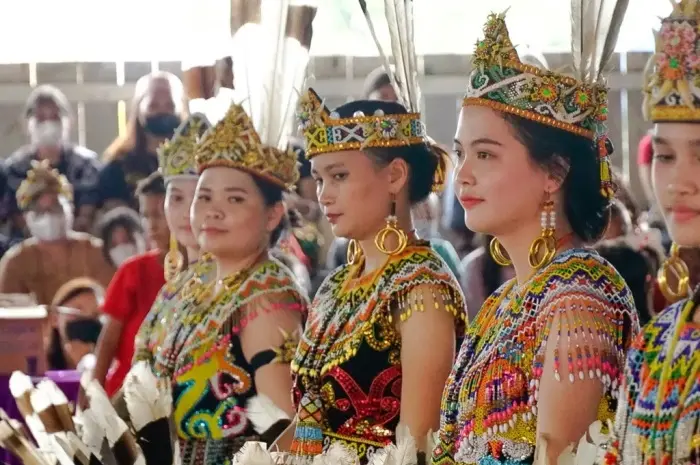
Discover the various unique traditions of the Dayak Tribe that contain deep philosophy, from Tiwah to Gawai Dayak, as a rich cultural heritage of Kalimantan that is worth preserving.
The Dayak tribe, the original inhabitants of the island of Borneo, has a rich culture that has been passed down from generation to generation. They live side by side with nature and hold fast to tradition as part of their identity and respect for their ancestors.
The various rituals and ceremonies performed by the Dayak Tribe are not merely ceremonies, but symbols that are full of spiritual and social meaning.
These traditions show how deeply connected they are to nature, community, and the spirit world. Let’s explore 10 unique traditions of the Dayak Tribe that radiate the beauty of their culture and philosophy of life.
1. Tiwah Ritual: Escorting Spirits to the Afterlife
Tiwah is the most sacred death ritual among the Ngaju Dayak Tribe. This ceremony aims to deliver the spirit of the deceased to Lewu Tatau (the afterlife).
The bones of the previously buried corpse will be lifted and placed in the Sandung, a small building specifically for storing the bones.
During the procession, there are various activities such as traditional dances, traditional music, and the slaughter of animals, such as buffalo and pigs.
Tiwah symbolizes the highest respect for ancestors and is an event to strengthen family ties that are still alive. For the Dayak people, Tiwah is a ritual that must be performed so that the spirits of their ancestors find peace and do not disturb life in the world.
2. Ngayau: Tradition of Head Hunting as a Symbol of Strength
Ngayau, or the tradition of head hunting, was previously carried out as a form of protection and maintaining tribal honor. The enemy’s head is considered a symbol of the courage and strength of a Dayak warrior.
This ritual also has a spiritual meaning because it is believed to maintain the balance and tranquility of the village.
Although the practice of Ngayau is no longer carried out literally, this tradition is remembered as history and evidence of the resilience of the Dayak Tribe.
In modern life, Ngayau is interpreted as a form of solidarity and cooperation between tribes to maintain peace and harmony.
3. Gawai Dayak: A Joyful Harvest Festival
Gawai Dayak is an annual festival celebrated as a form of gratitude for the harvest. This celebration involves traditional dances, traditional songs, and a large party attended by all members of the community.
Gawai Dayak not only celebrates a successful harvest, but also strengthens social relations among community members. This festival is a momentum to showcase the richness of Dayak culture, from traditional clothing, typical cuisine, to traditional games.
4. Auction Night: A Matchmaking Tradition That Respects Freedom
In the Malam Belelang tradition, young men and women have the opportunity to get to know each other and choose their life partners. This tradition is usually held in a series of large traditional events such as Gawai Dayak.
The young people will show their skills, such as dancing, playing traditional musical instruments, or showing their handicrafts.
This tradition illustrates openness and respect for the freedom to choose a life partner, making it a social event that strengthens the bonds of love between the young generation of Dayaks.
5. Hudoq: Dance of the Spirit of Fertility and Protector of the Fields
Hudoq is a masked dance involving dancers in flashy costumes and large masks that resemble the faces of spirits. This dance is performed to pray for fertile land and abundant harvests.
In Dayak Kenyah belief, Hudoq is the embodiment of the spirit of forest guardian and plant protector. This ritual is held every year before the rice planting season begins, as a form of prayer for nature to provide abundant blessings to the community.
6. Punan: Self-Purification Ritual and Cleansing of Negative Energy
Punan is a tradition of self-purification carried out by bathing in rivers or by using typical Dayak herbal concoctions. This ritual aims to cleanse oneself of negative energy and disease, as well as restore one’s spiritual balance.
Punan is often performed before facing important events such as weddings or Tiwah. This tradition shows the closeness of the Dayak people to nature and the belief that water is a sacred medium of purification.
7. Tattoo (Tatung): Symbol of Identity and Social Status
Tattoos for the Dayak people are not just body decoration, but have deep philosophical meaning. Each tattoo motif reflects a person’s tribal identity, social status, and spiritual achievements.
The tattooing process uses traditional tools such as thorns and charcoal, which takes time and high precision. Dayak tattoos are believed to be protective from evil spirits and to guide spirits to the ancestral realm after death.
8. Menugal: Tradition of Planting Rice by Mutual Cooperation
Menugal is a rice planting ritual carried out by village communities through mutual cooperation. In this tradition, a digging tool is used to make holes in the ground before the rice seeds are planted.
Menugal is not just an agricultural tradition, but also a symbol of solidarity and togetherness in the community. This ritual teaches the importance of working together to achieve shared success.
9. Balian: Traditional Medicine and Spirituality
Balian is a traditional healing ritual that involves a shaman or someone who has special spiritual abilities. In this ritual, prayers, dances, and herbal concoctions are used to cure diseases and expel evil spirits.
Balian is a form of local wisdom that reflects the Dayak people’s belief in the power of nature and the harmonious relationship between humans and the spirit world.
10. Nugal Benih: Offerings to the Goddess of Rice
Nugal Benih is a ritual of respect for the Goddess of Rice who is believed to guard agricultural products. In this ceremony, farmers present offerings in the form of agricultural produce and prayers to the goddess who protects the fields.
Nugal Benih symbolizes the Dayak people’s gratitude and respect for nature as their main source of livelihood. This ritual also shows the harmony between humans and the environment which is maintained with great wisdom.
The traditions of the Dayak tribe are a reflection of their deep connection with nature and their ancestors. Every ritual performed is not only a form of respect for tradition, but also a way to maintain balance and harmony in life.
By understanding and preserving this tradition, we help maintain a cultural heritage that has existed for centuries. The Osing Tribe teaches that maintaining good relations with nature and others is the key to a prosperous and meaningful life.

