Your gut does much more than digest food. It also acts as a carefully controlled border between the outside world and the rest of your body.
The lining of the intestine allows nutrients, water, and electrolytes to pass through while helping keep unwanted microbes, toxins, and large molecules from crossing too easily. This protective system is usually called the intestinal barrier.
Researchers have become increasingly interested in how diet quality may influence intestinal barrier function, especially through fiber intake, gut microbes, dietary fats, polyphenols, and food processing.
The relationship is not as simple as saying one food “repairs the gut” while another destroys it. Human studies use different methods to measure intestinal permeability, and results are sometimes inconsistent.
Still, systematic reviews suggest that diet can influence barrier-related processes, although the strength of evidence varies by nutrient and population.
The bigger picture matters most: repeated eating patterns can shape the intestinal environment over time.
What Is the Intestinal Barrier?
The intestinal barrier is not a single wall.
It is a multilayered defence system involving intestinal epithelial cells, mucus, immune cells, gut microbes, and proteins that control the spaces between neighboring cells.
One important part of this system is formed by tight junction proteins. These proteins help regulate what can pass between intestinal cells.
When barrier regulation becomes impaired, intestinal permeability may increase. You may have heard this described online as “leaky gut,” although that phrase is often used much more broadly than it is in clinical research.
Scientists usually prefer terms such as increased intestinal permeability or barrier dysfunction, because these can be measured more precisely.
The goal is not to create an intestine that is completely sealed. Nutrients still need to cross the gut lining efficiently. A healthy barrier is selective rather than permanently closed.
Fiber Can Support the Gut Barrier Through the Microbiome
Dietary fiber is one of the strongest links between diet and gut health.
Humans cannot fully digest many fibers in the small intestine. Instead, some travel to the colon, where gut bacteria ferment them.
This fermentation can produce short-chain fatty acids such as acetate, propionate, and butyrate.
Butyrate is especially interesting because colon cells can use it as an energy source. It also appears to influence mucus production, immune regulation, and tight junction function.
Reviews of intestinal barrier research consistently highlight fiber and short-chain fatty acids as potentially supportive factors.
However, not all fibers behave identically.
Inulin, resistant starch, beta-glucan, cellulose, and other fibers have different structures and are fermented by different microorganisms.
A 2024 systematic review of studies in healthy people found moderate-quality evidence that chicory inulin could reduce intestinal permeability in adults, although only a limited number of dietary interventions met the review criteria.
That is a useful reminder that promising mechanisms do not always translate into dramatic effects in every human trial.
A Healthy Gut Microbiome Helps Maintain the Barrier
Diet also influences the intestinal barrier indirectly through the gut microbiome.
Gut bacteria interact with mucus, immune cells, dietary compounds, and the intestinal lining itself. Some microbial metabolites may support barrier function, while disruption of the microbial ecosystem can contribute to an unfavorable intestinal enviroment.
Fiber-rich foods give many beneficial microbes fermentable material to work with.
Vegetables, legumes, whole grains, fruit, nuts, and seeds also provide different fibers and phytochemicals, potentially supporting a more functionally diverse microbial community.
Reviews of the intestinal barrier describe a close relationship between microbes, their metabolites, inflammatory signalling, and epithelial integrity.
This does not mean that having the highest possible number of bacterial species guarantees a healthy gut.
The microbiome is highly individual. What matters may be less about reaching a specific diversity score and more about maintaining useful microbial functions, stability, and metabolite production.
Dietary Fat Quality May Matter
Dietary fat is another area where quality appears to matter more than simply whether fat is present.
Some experimental and human research suggests that certain high-fat dietary patterns, particularly those rich in saturated fat, may be associated with increased intestinal permeability or inflammatory signalling.
In contrast, omega-3 polyunsaturated fats and other unsaturated fat sources may be more supportive of barrier-related processes.
A review of diet and intestinal permeability found associations between better permeability markers and diets containing more omega-3 fats alongside fiber, vitamins, minerals, probiotics, and polyphenols.
Still, it would be misleading to label all saturated fat as a direct cause of barrier damage.
Meals are mixtures of nutrients, and people eat dietary patterns rather than isolated fatty acids.
A meal containing salmon, vegetables, beans, and olive oil creates a very different nutritional environment from one dominated by fried foods, refined starches, and sugary drinks.
This is why overall diet quality is usually more informative than focusing on one nutrient.
Polyphenol-Rich Foods May Support Barrier Function
Plants provide more than vitamins and fiber.
They also contain polyphenols, a large group of compounds found in foods such as berries, cocoa, tea, coffee, herbs, grapes, vegetables, and nuts.
Many polyphenols are not completely absorbed in the small intestine. Some reach the colon, where gut microbes transform them into smaller metabolites.
Reviews suggest these compounds may interact with the microbiome, inflammatory pathways, and intestinal barrier function, although much of the mechanistic research still comes from laboratory and animal studies.
More recent research continues to investigate how different phenolic compounds influence tight junction proteins, oxidative stress, and inflammatory signalling.
The practical takeaway is not to buy a concentrated polyphenol supplement.
It is much simpler to regularly eat colorful plant foods.
Blueberries one day, tomatoes another, herbs in dinner, nuts as a snack, and coffee or tea if you enjoy them can naturally increase the variety of plant compounds in your diet.
Highly Processed Diets May Create a Less Supportive Environment
Ultra-processed foods are often discussed in gut health conversations, but the relationship is complex.
The concern is not simply that a food comes in packaging.
Some highly processed dietary patterns contain relatively little fiber while providing large amounts of refined starch, added sugars, saturated fat, sodium, and certain food additives.
Reviews of intestinal barrier research have raised concerns about compounds such as some emulsifiers and surfactants because experimental evidence suggests they may influence mucus, microbiota, or permeability.
However, much of the strongest evidence for specific additives comes from preclinical research.
That means it is premature to claim that every emulsifier or processed food directly damages the human intestinal barrier.
The more useful message is about dietary displacement.
If most meals come from heavily refined foods, there may be less room for fiber, legumes, vegetables, fruit, whole grains, and other foods that provide nutrients used by both intestinal cells and gut microbes.
Mediterranean-Style Eating Fits Many Barrier-Friendly Principles
There is no single official “intestinal barrier diet.”
However, dietary patterns commonly associated with good metabolic and cardiovascular health often contain many of the nutrients researchers study in relation to barrier function.
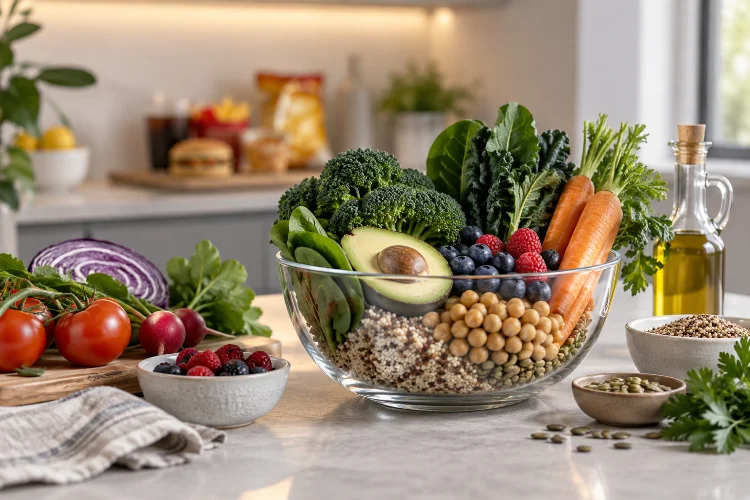
A Mediterranean-style pattern, for example, typically includes vegetables, legumes, fruit, whole grains, nuts, olive oil, herbs, fish, and relatively limited amounts of highly refined foods.
That naturally provides fiber, unsaturated fats, polyphenols, minerals, and a wide range of plant compounds.
Current reviews suggest that nutrients and bioactive compounds can affect the intestinal barrier through multiple pathways, including microbial fermentation, mucus production, epithelial repair, immune regulation, and tight junction signalling.
But the science is still developing.
A healthy dietary pattern should not be presented as a proven treatment for intestinal permeability disorders.
People with inflammatory bowel disease, celiac disease, severe digestive symptoms, or other gastrointestinal conditions may require individualized medical and nutritional care.
Gut Barrier Health Is About More Than Food
Diet matters, but it is not the only influence on intestinal function.
Medications, infections, alcohol intake, chronic disease, inflammation, sleep, stress, age, and the existing microbiome can all affect the gut environment.
Even researchers sometimes struggle to compare studies because intestinal permeability can be measured in several different ways. Different tests may examine different sections of the gastrointestinal tract or different components of barrier function.
This is one reason sensational claims about “healing a leaky gut in seven days” should be treated cautiously.
The intestinal barrier is biologically complex.
Rather than chasing one supplement or eliminating large groups of foods without a clear reason, it usually makes more sense to improve the overall pattern: eat enough fiber, diversify plant foods, choose unsaturated fats more often, limit excessive alcohol, and avoid making ultra-processed foods the foundation of the diet.
Consistancy is probably more important than finding a perfect ingredient.
Diet quality may influence intestinal barrier function through several connected pathways.
Fiber can feed gut microbes that produce short-chain fatty acids, polyphenols may interact with microbial and inflammatory pathways, and dietary fat quality may influence the intestinal environment.
Meanwhile, highly refined dietary patterns may provide fewer of the compounds that support healthy microbial and epithelial function.
The evidence is promising, but the gut barrier is too complex to reduce to a single “good” or “bad” food.
Focus on your overall eating pattern. Include vegetables, legumes, whole grains, fruit, nuts, seeds, healthy fats, and a range of plant foods across the week.
If you have persistent abdominal pain, unexplained weight loss, chronic diarrhea, bleeding, or significant digestive symptoms, speak with a healthcare professional rather than trying to self-treat presumed barrier dysfuction through diet alone.